


Cherry Fiction-Webnovel&Books
4.337.00 Reviews
App Specs
- Version
- 2.2.0
- Updated On
- License
- Free
- Downloads
- 50,000+
- Developer
- NovelBuddy
- Categories
- Sports
- Platform
- Android
Screenshots




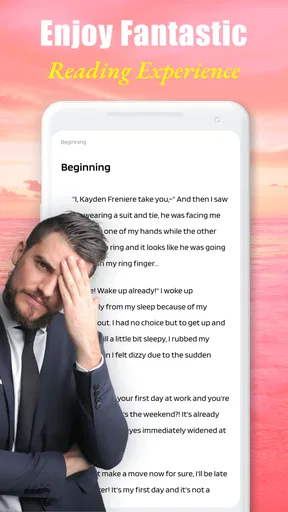
 Analysis by AppCompare
I approached Cherry Fiction-Webnovel&Books expecting a reading app, but its store placement as a Sports game makes the first impression slightly unusual. In practice, the important question is not whether it behaves like a traditional sports title, but whether its story-focused format gives me enough reason to keep opening it. Developed by NovelBuddy, it presents itself as a place for people who enjoy online fiction, and my experience is best understood as a guided reading journey rather than a conventional game built around matches, controls, or physical competition.
That distinction matters before you install it. If you want quick rounds, tactical decisions, or a clear win-and-lose loop, this will not replace a normal sports game. If you like discovering serialized stories and measuring your progress by chapters, reading sessions, and the desire to continue, the format becomes much easier to appreciate. I found the appeal strongest when I treated each reading session as a small personal goal instead of waiting for the app to provide the kind of challenge found in a traditional game.
How the reading journey creates its early goals
The first useful goal is simple: choose a story and make enough progress to decide whether it deserves your time. That sounds obvious, but it is important in a large reading catalog. I do not recommend trying to sample everything. A better approach is to select one story that matches your mood, read far enough to understand its voice and pacing, and then either commit to it or move on. This keeps the early experience focused instead of turning it into endless browsing.
For me, the strongest opening routine was to set a modest target before starting. Reading a few chapters during a commute, finishing a section before bed, or returning to one ongoing story after lunch gives the app a purpose. Without that personal structure, a story platform can feel passive: I scroll, glance at descriptions, and spend more time deciding than reading. The app works better when I enter with a clear question, such as whether the characters have developed enough to keep me interested.
This is also where Cherry Fiction differs from a standard sports game. A sports title usually gives me an immediate objective, visible controls, and a result at the end of a session. Here, the early goal is interpretive. I am judging tone, characters, and momentum. The reward is not a scoreboard; it is the feeling that a story has earned another session. Readers who enjoy that slower kind of engagement will understand the appeal quickly, while players looking for instant feedback may find the beginning too quiet.
The free entry point makes experimenting easier. The game is free to install, so I can explore its reading experience without paying before I know whether the catalog suits me. At the same time, in-app items range from $0.99 to $99.99 per item, which means I would be careful about treating every visible unlock as part of the basic reading routine. My advice is to establish a reading habit first and make purchasing decisions only after I understand how much of my chosen story I can comfortably access without spending.
What progress feels like when the reward is another chapter
Progress in a webnovel app is less dramatic than leveling up a character, but it can still be satisfying. Each completed chapter gives me a small sense of movement, and the larger reward is narrative continuity. I remember where I left off, return to the same cast, and gradually build an attachment that makes the next session easier to start. This is a quiet progression loop, yet it can be surprisingly effective for readers who prefer long-form stories to short bursts of gameplay.
Worth Reading Before You Choose

EA SPORTS FC Mobile 26 Is a Bigger Football Game, but It Takes Time

Flipboard Shows What News Apps Must Do Beyond the Feed

Switching to Android Auto Means Rethinking Your Driving Routine

Google Calendar Makes a Crowded Week Easier to Manage

Ludo King Makes the Most of the Minutes Between Plans

Baby Panda World Brings Quick Play to Modern Phones, but Its Game Library Feels Busy
The key signal is whether the story itself keeps pulling me forward. A cliffhanger can create a stronger reason to return than a generic notification, because the motivation comes from the content rather than an external prompt. I found it useful to stop at a natural pause when possible, rather than forcing myself to read until I was tired. That leaves enough curiosity for the next session and prevents the app from turning into an obligation.
Another practical signal is how quickly I can resume after a break. A reading app needs to support memory: I should know which story I was following and where I stopped. When that process feels smooth, the app fits naturally into spare moments. When I have to search repeatedly or reconstruct my place, the emotional thread weakens. For that reason, I recommend keeping one main story as the anchor and treating other titles as occasional alternatives instead of constantly switching between them.
This approach also answers a question many new users have: is the app suitable for short reading sessions? Yes, but with a qualification. It is suitable when the story is divided into manageable chapters and I am comfortable stopping between developments. It is less suitable if I want a self-contained experience that begins and ends within five minutes. The reading format rewards continuity, so the best results come from returning regularly rather than expecting a complete arc in one sitting.
Difficulty, friction, and the absence of a traditional challenge curve
There is no conventional difficulty curve here in the way I would expect from a sports game. I am not learning increasingly complex controls or facing stronger opponents. The challenge comes from maintaining attention, choosing what to read next, and deciding whether a slow opening deserves patience. That can still be meaningful, but it is a different type of challenge. The app asks for time and curiosity rather than reflexes or strategic execution.
The most noticeable friction is the possibility of uneven pacing between stories. Some chapters may establish a premise quickly, while others may take longer to become engaging. I would not judge the entire app by one slow beginning, but I also would not force myself through a story that repeatedly fails to create interest. A useful rule is to give a title a fair trial, then switch if the writing, tone, or rhythm does not fit the reason I opened the app.
That flexibility is one of the platform’s strengths, but it can also weaken commitment. Having many possible stories nearby makes it easy to abandon one whenever the tension dips. I found that choosing a theme or mood before browsing helped: romance for a relaxed evening, suspense when I wanted momentum, or a lighter story when I had limited attention. The decision becomes more deliberate, and the catalog feels less like a wall of options.
Readers should also understand the difference between narrative tension and game difficulty. A dramatic chapter may make me eager to continue, but it does not test my skill. If I want a title that measures improvement through victories, rankings, or increasingly demanding play, a dedicated sports game is the better choice. Cherry Fiction is closer to an interactive reading habit than to competitive entertainment, even though it is categorized as a game.
How pacing supports return visits—and where it can feel pressuring
The app’s retention strength comes from serialized reading. Once I care about a storyline, returning is easy because I want to know what happens next. That is a healthier reason to revisit than opening an app simply out of routine. The danger is that serialized fiction can make me feel that I must keep up, especially when a story presents frequent turning points or when access to later content appears connected to purchases.
I handle that pressure by setting boundaries before I begin. I decide how long I want to read and whether I am willing to spend anything. This is especially important because the game includes in-app purchases, with individual items priced from $0.99 up to $99.99. The broad range makes it essential to slow down around unlock decisions. A cliffhanger can make an immediate purchase feel tempting, but I prefer to ask whether I am paying for genuine long-term enjoyment or reacting to a moment of impatience.
That is one of the less obvious trade-offs of the format: narrative momentum can be both the best feature and the strongest source of pressure. A good story creates a natural reason to return, but that same curiosity can make interruptions feel more frustrating than they would in a normal book. I recommend using the free experience to identify stories that genuinely hold my attention before considering any paid access. If the writing does not already work for me, an unlock will not fix the underlying problem.
The app is also better for readers who enjoy ongoing fiction than for people who dislike waiting between story developments. A complete novel in an ebook reader gives me control over the entire reading arc. A webnovel platform encourages repeated visits and gradual progress. Neither approach is automatically better; the right choice depends on whether I enjoy anticipation. I personally like the return-and-discover rhythm, but I would choose a conventional ebook app when I want uninterrupted reading without serialized friction.
Everyday use: fitting a chapter into a real routine
A realistic use case is a short evening session after work. I open the app, return to the story I selected earlier, and read until I reach a sensible pause rather than trying to finish an entire plot segment. The session feels more rewarding when I put the phone down with a clear sense of where I stopped. On another day, I might use a few quiet minutes while waiting somewhere, but I would choose a story with enough immediate momentum that a brief interruption does not ruin the experience.
For students or commuters, the main advantage is portability and low commitment at the start. I can carry several possible stories without carrying a physical book, and I can change direction when my mood changes. The limitation is attention: reading on a phone beside notifications and other apps makes it easier to lose focus. I get more from Cherry Fiction when I silence distractions and treat the session as reading time rather than casual scrolling.
Parents and younger readers should pay attention to the Teen content rating. That rating makes the app more appropriate for older readers than for children, and I would not hand it to a young child without checking the individual stories first. The catalog format can bring together different tones and subjects, so the age label should be taken seriously even if one particular title feels harmless.
Who should choose it, and who should skip it
I would recommend Cherry Fiction to readers who enjoy discovering online stories, returning to familiar characters, and building a reading habit through small sessions. It is especially appealing if I want more variety than a single ebook provides and I like deciding what to follow next. The app’s free starting point also makes it reasonable for curious readers who want to test the format before committing money.
I would skip it if my main goal is sports gameplay. Despite its placement in the Sports category, this is not the kind of experience I would install for realistic matches, physical competition, or skill-based challenge. I would also look elsewhere if I prefer finished books, dislike serialized pacing, or want a reading environment with no temptation to buy individual items. A standard ebook reader is a better fit for uninterrupted, complete works; a conventional sports game is better for active play.
Readers with limited patience should be selective rather than browsing without a plan. The app can become less enjoyable when I keep abandoning stories after a few pages and replacing them with new choices. I found more value by identifying one promising title, giving it a fair chance, and only then expanding my reading list. That simple workflow turns the catalog from a distraction into a source of deliberate entertainment.
Device fit, maturity, and what to expect from the current release
The game supports devices running Android 7.0 or newer, which covers a broad range of Android phones and tablets. The current version is 2.2.0, and I would still check the store page on my specific device before installing, particularly if I use an older handset or rely on limited storage. Reading apps are not demanding in the same way as 3D games, but comfort depends heavily on screen size, text presentation, and how easily I can read for longer periods.
Its audience appears established enough to make the app worth investigating: Cherry Fiction has passed 50K installs, with an average rating of 4.3 from around 207 ratings and 37 written reviews. I treat those figures as a useful sign of interest rather than a guarantee. A reading platform can suit one person’s taste and disappoint another simply because story preferences are personal. I would use the rating as a reason to try it, then judge the experience by the titles and pacing that work for me.
The developer, NovelBuddy, has positioned the product around story lovers rather than around competitive play. That focus explains why the app’s strongest qualities are discovery, continuity, and emotional investment. It also explains its limitations: the experience depends more on the quality and appeal of the stories I choose than on a deep mechanical system. If I am expecting the progression design of a sports game, I may feel that something is missing. If I am looking for a mobile fiction library with a game-like store presence, the design makes more sense.
My progression verdict after using it as a game-like reading platform
Cherry Fiction succeeds when I measure progress by reading momentum. The early goal is finding one story worth following, the progress signal is reaching the next chapter, and the challenge is maintaining attention through uneven pacing. Its retention loop is strongest when curiosity brings me back naturally, not when purchase pressure or endless browsing takes over. That makes the experience more personal and less skill-based than the Sports label suggests.
My main advice is to begin slowly: choose one story, read enough to test its voice, set a session limit, and avoid rushing into paid unlocks. Keep the app for moments when I genuinely want serialized fiction, and use a conventional ebook reader when I want a complete, uninterrupted book. With those expectations, the free entry point is worthwhile for the right audience.
Overall, I see Cherry Fiction as a niche but approachable choice for mobile story readers. It will not satisfy someone searching for matches, competition, or a demanding gameplay loop, but it can sustain a regular reading habit through curiosity and chapter-by-chapter progress. If your ideal reward is discovering what happens next, rather than defeating an opponent, this is the kind of game-like reading experience worth trying.
Pros
- Large selection of romance
- fantasy
- and serialized webnovels
- Personalized recommendations help discover new stories
- Offline reading is convenient for travel or low-connectivity areas
- Regular updates keep ongoing novels engaging
- Simple bookmarking makes it easy to track favorite books
Cons
- Some chapters or novels may require coins or in-app purchases
- Story quality can vary considerably between different authors
- Frequent notifications may feel intrusive to some readers
- Offline downloads can use substantial device storage
- Availability of titles may differ by region or account
FAQs for Cherry Fiction-Webnovel&Books
What is Cherry Fiction-Webnovel&Books?
Cherry Fiction-Webnovel&Books is a mobile reading platform focused on web novels, serialized fiction, and digital books. After exploring the app, its main appeal is the variety of romance, fantasy, drama, and other popular genres available in one place. Stories are generally presented chapter by chapter, making the app suitable for readers who enjoy following ongoing series and discovering new authors through personalized recommendations.
Is Cherry Fiction-Webnovel&Books free to use?
The app can generally be downloaded and used without an upfront purchase, and some stories or chapters may be available for free. However, access to complete books, premium chapters, or faster reading progress can depend on the title and its unlocking system. Before spending money, readers should check the in-app pricing, available rewards, and whether virtual coins or subscriptions are required for the stories they want to read.
What types of books and stories are available in the app?
Cherry Fiction-Webnovel&Books is mainly aimed at readers who enjoy web fiction and popular digital storytelling. The catalog commonly includes romance, fantasy, contemporary drama, mystery, and relationship-focused plots, although the exact selection can change over time. Because many titles are serialized, the quality, writing style, update schedule, and completion status may vary from one story to another.
Does Cherry Fiction-Webnovel&Books require an internet connection?
An internet connection is normally needed to browse the catalog, load recommendations, synchronize your reading progress, and open newly requested chapters. Depending on the version and the individual title, some content may be temporarily cached for offline reading, but users should not assume that every book can be downloaded permanently. Checking the app’s download and offline-reading options is recommended before traveling or reading without mobile data.
Is Cherry Fiction-Webnovel&Books suitable for all ages?
The app is not necessarily appropriate for every age group because web novels can include mature romance, emotionally intense situations, violence, or other themes depending on the story. Parents and younger readers should review the store rating, content labels, and individual book descriptions before using it. Adults should also remember that fictional content and community or recommendation features can vary considerably across different titles.


